A good taper jig helps you cut consistent angles without fighting the workpiece or guessing at alignment. For chair legs, table legs, trim parts, and other tapered pieces, the right setup can save time and improve accuracy.
Below, we break down the best woodworking table saw taper jig options for 2026, with a focus on cut quality, ease of adjustment, and stability.
Best 10 Woodworking Table Saw Taper Jig Picks for 2026
Precision micro-adjustment
MICROJIG GRR-RIPPER TJ-5000 Microdial Tapering Jig

- 1/8-degree angle accuracy
- 122 preset settings with Microdial scales
- Dual MemoryLocks for repeat cuts
Best For: Precision tapering and furniture leg work
Two-in-one layout
Rockler Taper Jig and Straight-Line Cutting Guide
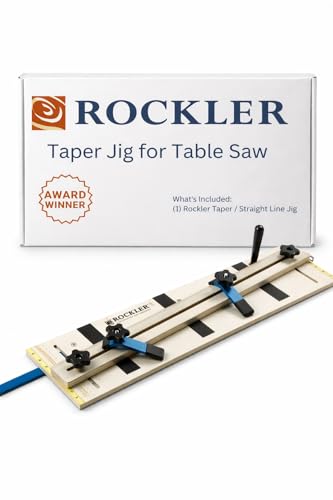
- Taper and straight-line ripping in one jig
- 36-inch miter bar for stable guidance
- Indexed angle setting and hold-down clamps
Best For: Users who want one jig for tapers and ripping
Lightweight angled cutting
POWERTEC 24-Inch Table Saw Tapering Jig

- 0 to 15 degrees of taper adjustment
- Laser-etched scale for quick setup
- Lightweight extruded aluminum rails
Best For: General-purpose tapered cuts on furniture parts
Compact adjustable setup
Mini Adjustable Precision Straight Line Tapering Jig

- Adjustable clamps for taper cuts
- Works as a straight-line ripping jig
- Aluminum miter bar with anti-lift discs
Best For: Compact everyday tapering and ripping
Lightweight Precision
Table Saw Tapering Jig with Laser Scale

- 24-inch guide rails for taper work
- 0° to 15° adjustable taper range
- Lightweight aluminum with laser scale
Best For: Woodworkers wanting a lightweight taper jig for repeatable angled cuts
Dual-Purpose Shop Jig
POWERTEC Taper/Straight Line Jig

- Taper jig plus straight-line ripping function
- Hold-down clamps and abrasive grip strips
- Fits specific full-size miter slot setups
Best For: Full-sized table saw owners needing taper and straight-line capability
Small Parts Control

- Compact jig for short legs and narrow parts
- Two hold-down clamps for small stock
- Miter bar positions can be adjusted
Best For: Precise taper cuts on short legs, shims, and other small parts
Precision Taper Setup
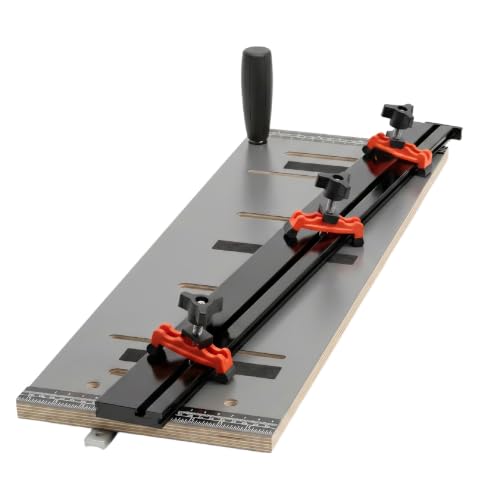
- Dual-scale setup with imperial, metric, and angle dots
- Three hold-down clamps plus grip strips for stock control
- Birch plywood base and aluminum fence add stability
Best For: Repeatable taper cuts and straight-line ripping with detailed setup controls
Compact Shop Utility
POWERTEC Small Parts Taper Jig

- Compact MDF base with melamine coating on both sides
- Includes adjustable fence, clamps, grip strips, and miter bar
- Indexing marks and handle support easier setup and control
Best For: Small-part taper work and shop users who want a compact dual-purpose jig
Long-Reach Taper Sled
Taper/Straight Line Jig with 37" Bar

- 37" miter bar provides extended guidance
- Steel fence and clamps support taper cuts
- Also works for straight-line ripping and edge jointing
Best For: Longer-guided taper work on chair legs, table legs, and edge jointing
Precision micro-adjustment – MICROJIG GRR-RIPPER TJ-5000 Microdial Tapering Jig
If you want a woodworking table saw taper jig built around fine angle control, the MICROJIG GRR-RIPPER TJ-5000 is aimed at precise setup work. Its Microdial system, 1/8-degree accuracy, and 122 presets make it a strong fit for repeatable tapered cuts on furniture parts like legs and other shaped pieces.
Best For: Woodworkers who want highly precise taper settings and repeatable leg-making setups.
Pros:
- Angle accuracy within 1/8 of a degree for detailed setup work
- 122 built-in presets with color-coded Microdial scales
- Dual MemoryLocks help switch between repeat tapers quickly
- Works with table saws, router tables, and band saws
Cons:
- Pushblocks are sold separately for best safety and stability
- Geared more toward precision than simple, fast one-off cuts
For makers focused on tapered furniture parts, this jig stands out for its adjustment range and repeatability. The included manual and DVD also make setup easier if you want to get the most from its more advanced controls.
Two-in-one layout – Rockler Taper Jig and Straight-Line Cutting Guide
This woodworking table saw taper jig is built for users who want one jig to handle both tapered cuts and straight-line ripping. Rockler’s design uses a 36-inch miter bar and a smooth sliding layout, making it practical for chair legs, table legs, and other angled stock that needs controlled feed.
Best For: Woodworkers who want a taper jig that also doubles as a straight-line ripping guide.
Pros:
- Switches from taper jig to straight-line ripping jig by removing the miter bar
- Fits standard 3/8" x 3/4" miter slots snugly
- Indexed angle setting system supports accurate setup
- Heavy-duty hold-down clamps add control during the cut
Cons:
- Setup depends on saw geometry and slot-to-blade spacing
- Initial taper cut may remove part of the base for zero-clearance support
If you need flexibility more than specialization, this Rockler jig offers a useful two-in-one approach. It is especially appealing for shops that move between taper work and straight ripping without changing tools.
Lightweight angled cutting – POWERTEC 24-Inch Table Saw Tapering Jig
The POWERTEC table saw taper jig is a straightforward option for angled cuts when you want a lightweight build and clear scale markings. With 24-inch aluminum rails, an ergonomic handle, and a laser-etched scale, it is geared toward repeatable taper cuts on common furniture parts and shop projects.
Best For: Woodworkers who want a lightweight taper jig with a wider taper range up to 15 degrees.
Pros:
- Adjustable taper range from 0 to 15 degrees
- Laser-etched scale makes setup easier to read
- Lightweight extruded aluminum construction
- Works well for legs, shelves, wedges, and similar parts
Cons:
- 24-inch rails may be less suited to very large workpieces
- Designed for taper cutting rather than dual-purpose rip work
This jig is a practical pick if you want simple controls and a broad taper range without a bulky setup. Its aluminum build should appeal to users who value easy handling and corrosion-resistant construction.
Compact adjustable setup – Mini Adjustable Precision Straight Line Tapering Jig
This compact woodworking table saw taper jig is built for users who want a simple adjustable layout for long taper cuts and straight-line ripping. It includes a lightweight aluminum miter bar with anti-lift discs and spring-loaded plungers, which helps it fit securely in standard miter slots while keeping the setup straightforward.
Best For: Woodworkers who want a compact adjustable taper jig for everyday shop use.
Pros:
- Adjustable clamps support precise taper setup
- Can be used as a straight-line ripping jig when the miter bar is removed
- Aluminum miter bar includes anti-lift discs and spring-loaded plungers
- Includes full-color instructions and safety hold downs
Cons:
- Maximum stock height is limited to 2 inches
- Best suited to standard-size shop tasks rather than oversized stock
For smaller projects and routine taper work, this jig offers a practical mix of adjustability and ease of use. It is a sensible choice if you want a versatile tool without moving into a more specialized or heavy-duty platform.
Lightweight Precision – Table Saw Tapering Jig with Laser Scale
If you need a woodworking table saw taper jig that’s easy to handle but still aimed at repeatable angled cuts, this lightweight aluminum model is built for straightforward taper work. Its 24-inch guide rails, laser-engraved scale, and locking adjustment knob make it practical for chair legs, shelving parts, wedges, and other tapered pieces.
Best For: Woodworkers who want a simple, lightweight taper jig for repeatable angled cuts on tablesaws or bandsaws.
Pros:
- Lightweight extruded aluminum construction with anti-corrosion performance
- Laser-engraved measuring scale and adjustable 0° to 15° taper range
- 24-inch guide rails plus ergonomic grip handle for controlled use
- Works with table saws and bandsaws for angled woodworking tasks
Cons:
- Designed around taper cutting rather than broader straight-rip functionality
- Best suited to wood workpieces and angled shop tasks
Overall, this is a solid pick if your priority is clean, repeatable tapers with a lighter jig that’s easy to manage in the shop. The wide taper range and clear scale make it useful for common furniture and carpentry projects.
Dual-Purpose Shop Jig – POWERTEC Taper/Straight Line Jig
POWERTEC 71395 Taper/Straight Line Jig for Table Saws with 3/4” Wide by 3/8” Deep Miter Slot
Check Price On AmazonThis woodworking table saw taper jig is geared toward shops that want both taper cutting and straight-line ripping in one setup. The POWERTEC design uses a 36-inch miter bar, adjustable fence, hold-down clamps, and abrasive grip strips to help keep stock stable during angled cuts or straight-line work.
Best For: Full-sized table saw owners who want a taper jig that can also serve as a straight-line ripping jig.
Pros:
- Dual-purpose design for taper cutting and straight-line ripping
- Includes adjustable fence, hold-down clamps, and abrasive grip strips
- 36-inch miter bar with detailed instructions for setup and use
- Built with MDF construction and melamine coating on both sides
Cons:
- Fit depends on specific miter slot and saw dimensions
- May not fit some job site or benchtop saws
- Heavier and larger than a compact small-parts taper jig
For woodworkers with a compatible full-size saw, this is the most versatile option in the group because it goes beyond tapering alone. Just verify your table saw measurements before buying so the miter bar and slot dimensions line up properly.
Small Parts Control – Rockler Small Parts Taper Jig
For smaller workpieces, this woodworking table saw taper jig focuses on control and accuracy rather than size. It’s a compact tapering jig with a hold-down clamp setup, movable miter bar positions, and non-slip features that make it better suited to short legs, shims, wedges, and other small parts.
Best For: Woodworkers cutting precise tapers on short legs, narrow parts, and other small stock.
Pros:
- Compact design aimed at small parts and shorter legs
- Two compact hold-down clamps help keep narrow stock from slipping
- Miter bar can be positioned in 3 spots for fit and adjustment
- Designed for precise tapered cuts, shims, wedges, and similar projects
Cons:
- Small size makes it less suitable for larger workpieces
- Intended for a specific 3/8″ x 3/4″ miter slot format
If your work is mostly furniture parts, small legs, or shop-made wedges, this compact jig is the most specialized option here. Its smaller footprint and clamp setup make it a practical choice when control matters more than capacity.
Precision Taper Setup – O'SKOOL Taper Jig with Clamps
If you need a woodworking table saw taper jig for chair legs, table legs, or straight-line ripping, this O’SKOOL model focuses on setup control and stock stability. Its dual-scale layout, adjustable stop block, and hold-down system are aimed at making repeatable taper cuts easier to dial in.
Best For: Woodworkers who want a stable taper sled with more detailed angle setup and repeatability.
Pros:
- Dual-scale taper setup with Imperial, Metric, and angle indexing dots
- Adjustable stop block helps maintain consistent cutting width
- Three hold-down clamps and abrasive grip strips help secure stock
- Birch plywood base and aluminum fence add rigidity during cuts
Cons:
- At 8.58 pounds, it is not the lightest option
- Designed around standard 3/4″ x 3/8″ miter slots, so fit depends on your saw
This is a strong pick if you value setup detail and workpiece control more than minimal complexity. The adjustable miter bar and repeatable stop block make it practical for matching parts, while the rigid fence and base support steadier cuts.
Compact Shop Utility – POWERTEC Small Parts Taper Jig
This woodworking table saw taper jig is built as a compact helper for taper cuts and straight-line ripping on small parts. The POWERTEC design combines a melamine-coated MDF base, adjustable fence, and indexing marks to keep setup straightforward for furniture and cabinet work.
Best For: Shops that want a compact taper jig for small parts and repeatable setup.
Pros:
- Includes miter bar, adjustable fence, clamps, grip strips, and hardware
- Indexing marks help simplify angle setting
- Ergonomic handle and hold-down clamps support controlled pushing
- Works as both a taper jig and a straight-line ripping jig
Cons:
- Designed for specific miter-slot and blade-distance requirements
- More compact base may be less suited to larger workpieces
Overall, this is a practical multi-use jig for people who want a smaller footprint without giving up basic taper-cut features. Its included accessories and setup marks make it approachable for a range of skill levels, provided your saw matches the fit requirements.
Long-Reach Taper Sled – Taper/Straight Line Jig with 37" Bar
If your woodworking table saw taper jig needs extra reach and a longer guide, this taper sled is built around a 37″ miter bar and steel fence. It is meant for tapered cuts, straight-line ripping, and edge jointing, with a simple indexed angle system and hold-down clamps to keep the workpiece under control.
Best For: Woodworkers who want a longer taper sled for chair legs, table legs, and edge jointing.
Pros:
- 37″ miter bar offers extended guidance
- Works as both a taper sled and straight-line ripping jig
- Heavy-duty hold-down clamps help secure the workpiece
- Large ergonomic handle supports smooth push action
Cons:
- Only fits specific miter-slot and blade-offset ranges
- Initial setup may remove a narrow piece of the base to create zero-clearance support
This is a good fit if you want a longer, more guided jig for repeat taper work and edge jointing. The extended bar and steel fence add confidence, but buyers should check compatibility carefully before ordering.
How We Picked the Best Woodworking Table Saw Taper Jig
We focused on tools that make repeatable taper and straight-line cuts easier on a table saw. Key factors included fence stability, miter-bar fit, adjustment range, clamp quality, scale readability, and whether the jig supports both tapered and straight cuts. We also looked at how well each Woodworking Table Saw Taper Jig handles small or awkward parts, since that is where safety and accuracy matter most.
Quick Comparison
In general, choose a heavier, longer jig if you regularly cut chair legs, table legs, or wider workpieces. A compact jig is better for smaller parts, light shop use, or tight storage spaces. Models with micro-adjustment or fine scales are best when you need highly repeatable results, while simpler jigs are usually enough for occasional taper work.
Key Buying Factors for a Woodworking Table Saw Taper Jig
Fit and Track Control
Check your saw’s miter slot size and make sure the jig tracks smoothly with minimal side-to-side play. A poor fit can cause wandering cuts and inconsistent tapers.
Fence Length and Support
Longer fences and wider support surfaces help stabilize longer stock. This is especially important for furniture parts and other pieces that need accurate, clean taper lines.
Clamp Design and Grip
A reliable clamp or hold-down system keeps the workpiece flat and secure. Look for non-slip surfaces, solid hold-down pressure, and easy access for setup changes.
Adjustment Range and Scale Accuracy
If you make multiple taper angles, a clear scale and precise adjustment mechanism can speed up setup and improve repeatability. For one-off cuts, a simpler design may be sufficient.
Material and Durability
Aluminum rails and rigid fences usually offer a good balance of weight and stability. Plastic components can still work well, but they should not flex under pressure.
Who Should Buy Which Woodworking Table Saw Taper Jig?
If you build furniture or cut angled legs often, choose a full-size, highly adjustable jig with strong clamping and a stable fence. If you mainly need occasional tapers or straight-line ripping, a lighter, simpler model may be the better value. For very small parts or precision work, prioritize micro-adjustment and secure workholding over maximum size.
For most woodworkers, the best Woodworking Table Saw Taper Jig is the one that matches the size of your stock, the frequency of your cuts, and the level of repeatability your projects demand.